Part movie review, part game design diary.
Download DEADLINE: A Nightcrawler RPG from itch.io.
Created for the One Page RPG Jam 2025, DEADLINE is also collected in Tiny Tome 3, along with 49 other single-page RPGs.
A Success Story
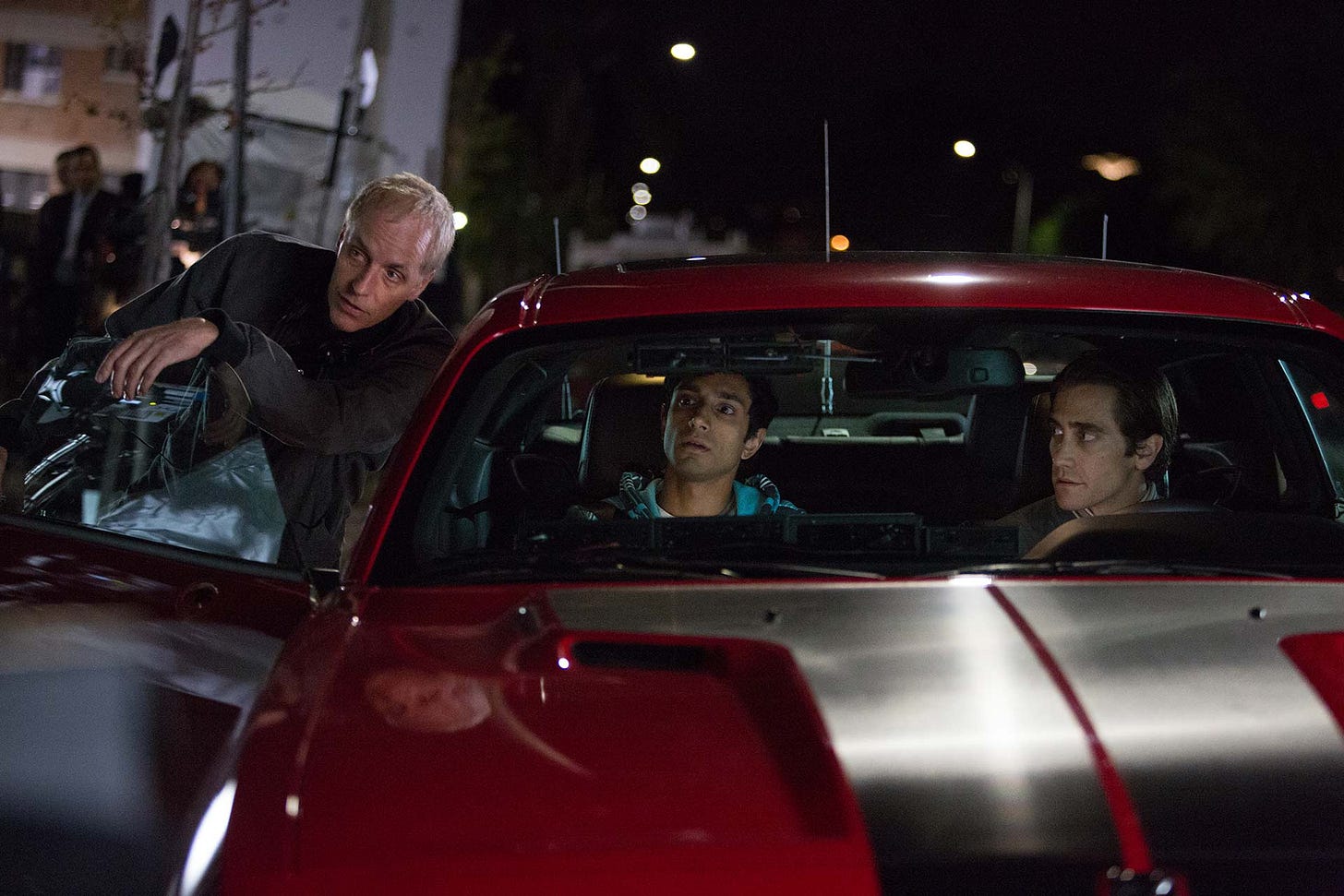
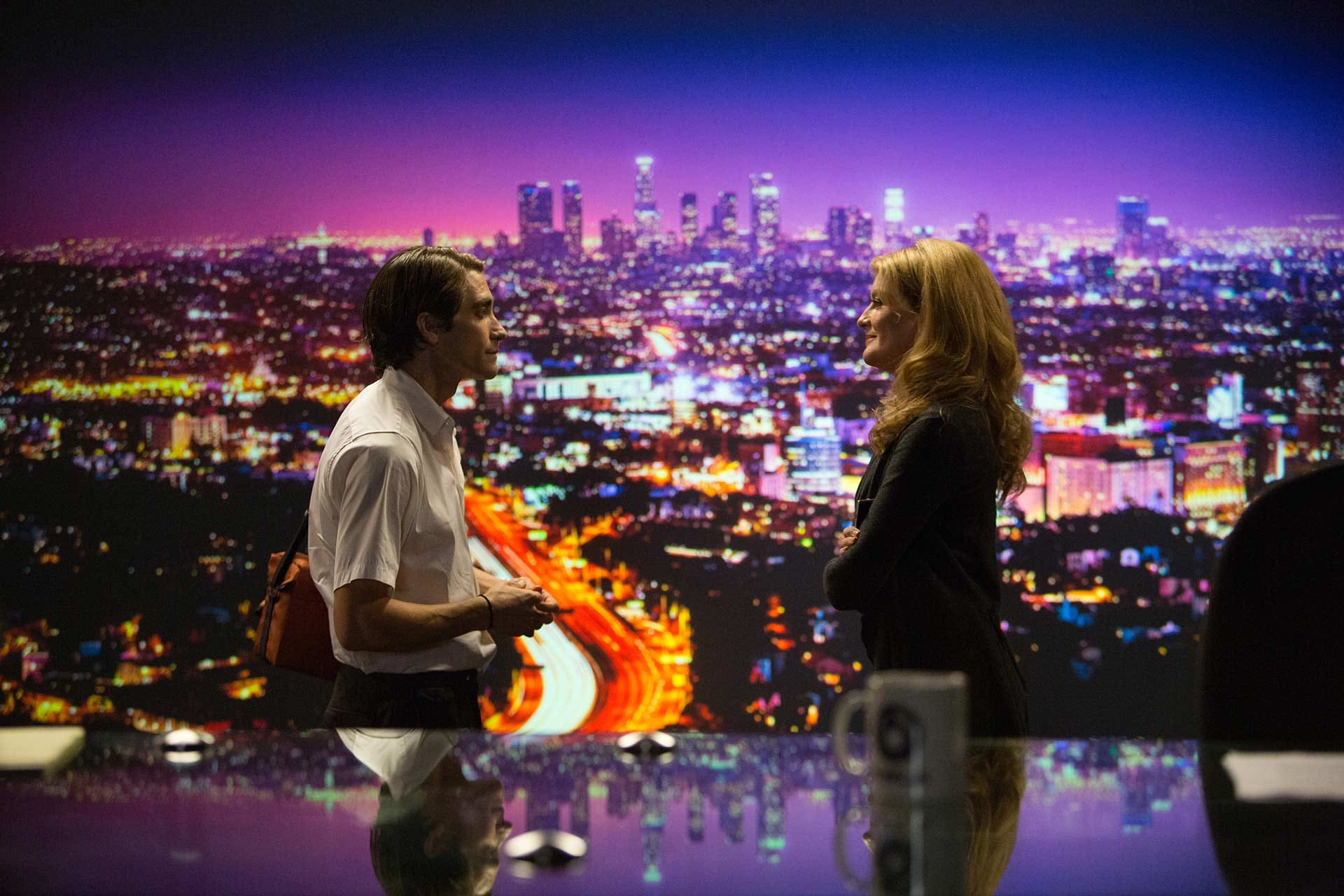
NIGHTCRAWLER is a thriller set in the nocturnal underbelly of contemporary Los Angeles. Jake Gyllenhaal stars as Lou Bloom, a driven young man desperate for work who discovers the high-speed world of L.A. crime journalism. Finding a group of freelance camera crews who film crashes, fires, murder and other mayhem, Lou muscles into the cut-throat, dangerous realm of nightcrawling – where each police siren wail equals a possible windfall and victims are converted into dollars and cents. Aided by Rene Russo as Nina, a veteran of the blood-sport that is local TV news, Lou blurs the line between observer and participant to become the star of his own story.
—Open Road Films
I was late to the game seeing this movie. It came out in 2014, but I only just saw it for the first time earlier this year and was entranced by its neo-noir setting and the strangely charming Jake Gyllenhaal (I mean, come on).
I love the way LA looks in this movie, avoiding the typical landmarks, instead focusing on the back alleys, bus stations, strip malls, and sprawl. And at night, it all looks so beautiful under the glow of the yellow sodium street lights. I love the dark sense of humor that runs like a current through the film, even when things get bleak. But I especially love the character of Lou Bloom. Played by anyone else, and I’m not sure the movie would have been as successful. Gyllenhaal brings a charisma to the creepiness of Bloom that’s intoxicating. It makes you root for him, even as he’s committing horrible crimes.
Writer and director Dan Gilroy says, “…the character of Lou is like a nocturnal animal that comes down out of the hills at night to feed. Jake would call him a coyote […] because coyotes are always hungry.”
I read a bunch of interviews with Gilroy after I saw Nightcrawler. I wanted to keep living in that world. It was this quote that gave me the idea to make it into a game: “It was my belief, when I was writing the screenplay, that if you came back 10 years after this film was over, Lou would be running a major, multinational corporation. I believe that the qualities that served Lou well at 3:00 in the morning, dragging bodies around, would serve extraordinarily well in a boardroom. I believe that Lou is a lonely, lost young man who’s living in a world reduced to transactions.”
The final scene of the movie (spoilers) shows Lou Bloom sending his new team of stringers out into the LA streets, in two branded vans that drive off in separate directions, to capture footage for his growing media empire. Gilroy refers to it like a virus that’s about to infect the city. “…we approach it as a success story,” Gilroy says, “of a guy who is looking for work at the beginning and is the owner of a successful business at the end […] I didn’t want at the end for the audience to go, ‘oh, the problem is this psychopath!’ I wanted the audience to go, ‘maybe the problem is the world that created and rewards this character.’”
Designing DEADLINE
I didn’t want to make a game about Lou Bloom. I wanted to make a game about what it means to survive in a world that rewards him. Lost and lonely characters. A world of transactions. A rising culture of hyper-violence and moral decay. From the start, I wanted the players to be upstart rivals to Bloom’s company, trying to beat the police to crime scenes, get artistically framed gore on camera, make money and deals in a fast-paced business environment, and avoid being killed by criminals and Bloom.
The first thing I needed was a chassis to hang it all on that would emphasize the greed and obsessive drive for success. What better way to make players feel greedy than dice pools? All those d6s rattling around in your clenched fists. I had played Lady Blackbird not too long ago and found its dice pool system elegant. I felt like the traits system would be a little unwieldy for this project, which I imagined as a very streamlined game. I wanted the game to move as quickly as Bloom’s sports car through the streets of LA, and didn’t want players debating over which traits were relevant to an action. There was also an early idea for four thematic stats that I was attached to, so I worked out a hybrid of Lady Blackbird’s dice pool resolution and a kind of Lasers & Feelings-meets-NSR-stats character creation.
I didn’t want to do a straightforward health point system. Nightcrawler isn’t a story about brawling. I wanted to emulate the risks that are in the movie with Burnout and Heat. The psychological and social toll of chasing tragedy for clout. Bloom is being investigated by the cops, and Riz Ahmed’s character, Rick, is slowly realizing he doesn’t feel good doing this work.
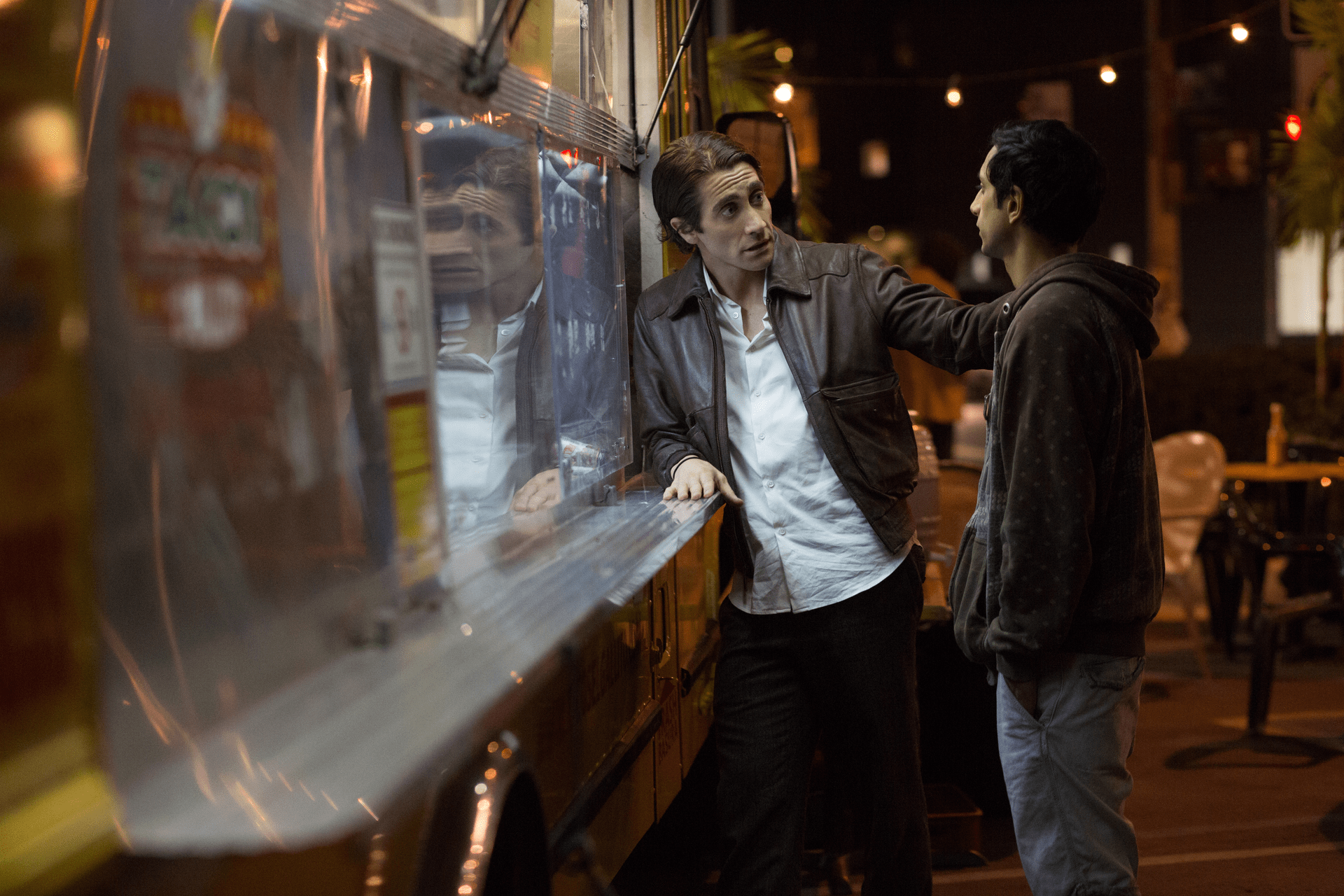
I brought the character trait Vice into the equation to give the GM something to push on and give players a choice about how fast they’re willing to burn out to get what they want. In the movie, Rick is a recovering addict, and although Bloom is clearly obsessed with success, he also has a desire for material things. He steals the watch from the security guard in the opening scene and he buys a fancy sports car as soon as he has enough money.
All the more reason for the Vehicle to have its own section in character creation. The scenes of Bloom careening through traffic, trying to get to the crime scene before anyone else, are exhilarating. I wanted how the players get around to be an important aspect.
I knew Bloom’s media empire needed to be a looming presence that grows more threatening as players accumulate successes. But as I’m writing this, I’ve realized that I called it Action Video News in my game, when it’s Video Production News in the movie. Maybe Bloom changed it in the time between the end of the movie and when this game takes place (sure, why not?). For the pressure that comes from trying to outscoop AVN, I favored speed of play over stats, abilities, or complicated frameworks. I used a simple pacing mechanism where every time the players succeed at undermining Bloom, he retaliates. Until there’s nothing left for it, but a final confrontation. How that plays out is left up to the GM.
The Bottom Line
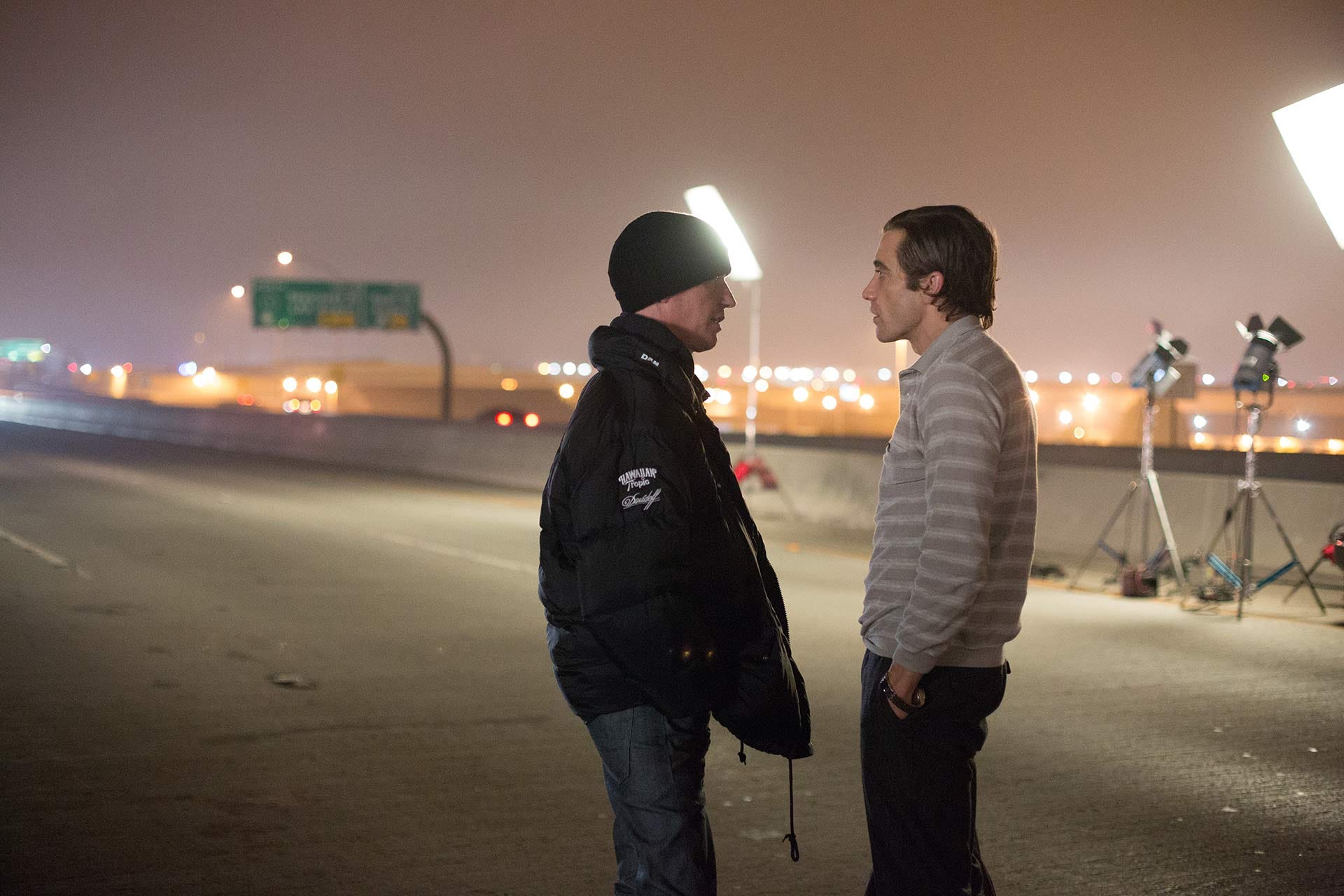
I’ve left a lot up to the GM, in fact. NPC details, city traffic, earning and spending money, making deals with the networks, and plenty more. That’s the nature of a one-page RPG. But hopefully, I’ve given enough advice and a solid gameplay loop in the Running the Game section that GMs will be able to fill in the blanks. It will probably help if you’ve seen the movie, although I’d love to hear from someone who plays this game but hasn’t seen it. In my opinion, this game is all about tone and pacing. Speeding to the crime scene and slowing down in moments of sadness and beauty. Climbing the corporate ladder, then having it fall out from under you. Watching it crash and burn. Gilroy says of Bloom’s outlook, “that the bottom line is the only thing that’s important, and if you pursue that, you will be rewarded and loved.” You’ll have to play to find out if that’s true.
Let me know what Jake Gyllenhaal movie I should turn into an RPG next. I’m thinking Road House.
Download DEADLINE: A Nightcrawler RPG from itch.io.
Created for the One Page RPG Jam 2025, DEADLINE is also collected in Tiny Tome 3, along with 49 other single-page RPGs.
 Christopher Kurts
Leave a comment